 A Teaching Portfolio Built Across Classrooms
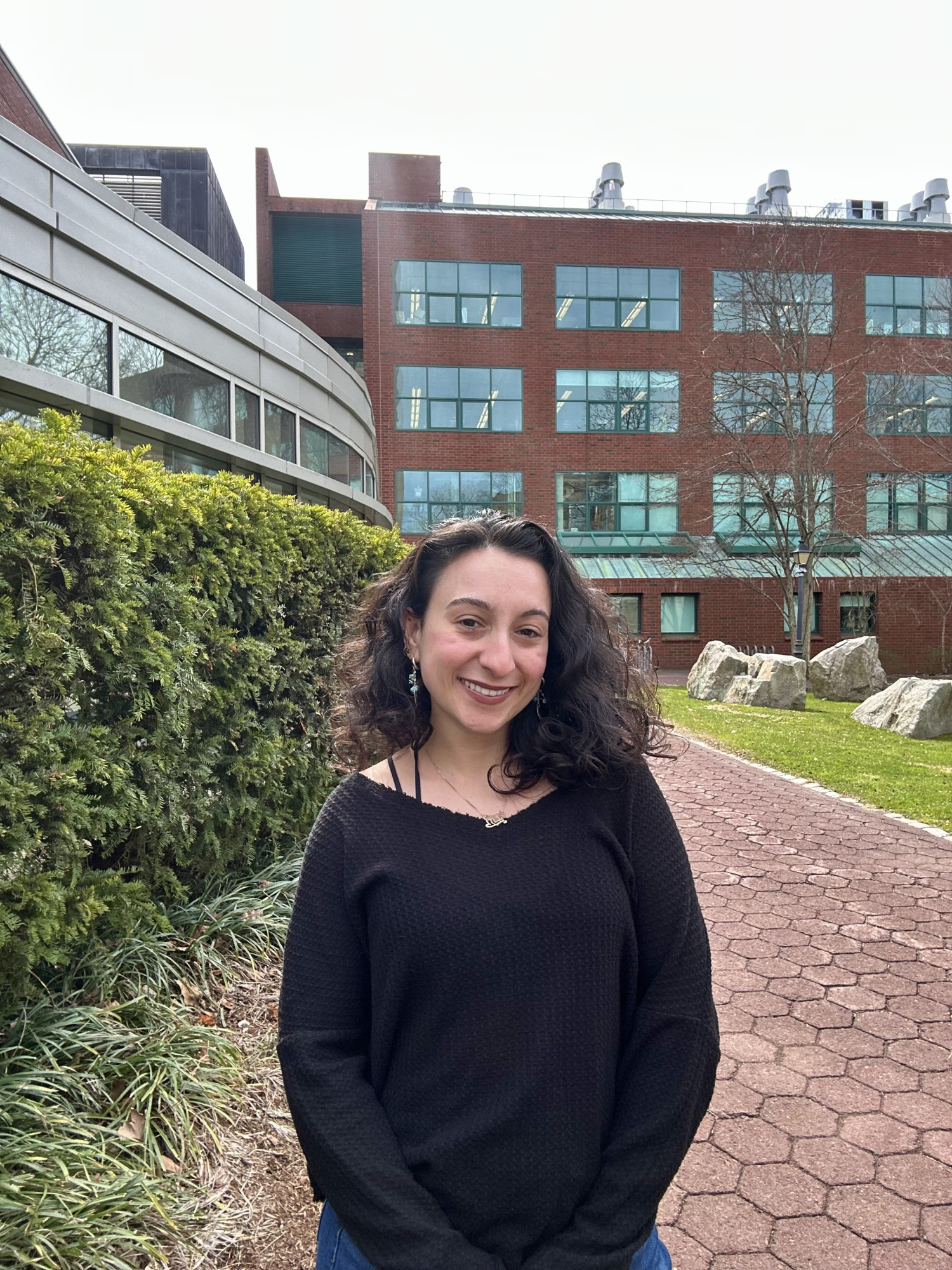
Hannah Shabtian has been selected for the Graduate School Excellence in Teaching Award. A fourth-year doctoral candidate in Brown’s Department of Earth, Environmental, and Planetary Sciences (EEPS), Shabtian has built a teaching portfolio that reaches from Brown undergraduates to local high school students and pre-college learners. Across these settings, she has become known for making complex Earth science concepts engaging, accessible, and meaningful to students with a wide range of backgrounds.
Designing a Course Around Connection
One of the clearest examples of her impact came in EEPS 0100, Surviving the Apocalypse: Earth’s Journey Through Natural Disasters Past and Present, a new course she helped teach in Fall 2025. Working with Harriet Lau, Manning Assistant Professor of Earth, Environmental, and Planetary Sciences, Shabtian developed a semester-long set of assignments centered on scientific communication, asking students to present geoscience ideas to both peer and lay audiences. Lau credited her with transforming a broad teaching goal into a defining feature of the course and praised her ability to create an open, energetic classroom environment where students felt comfortable participating.
“Throughout the course, Hannah engaged with students in small ways every lecture, learning the names of 46 students the moment that shopping period ended. These interactions built an environment of openness and ease which helped students ask questions without anxiety,” says Lau.
For Shabtian, the course stood out not just for its design, but for the students who filled the room. “It was particularly fun to build that kind of course with an instructor who shared a similar approach to teaching. This course also stood out because of the mix of students—athletes, majors from across campus and years, and many non-STEM students. The wide range of personalities and backgrounds made the classroom especially dynamic and memorable,” says Shabtian.
Reaching Beyond Brown
Shabtian's commitment to education extends well beyond campus. She has played a central role in the department’s DEEPS CORES outreach program at Hope High School. Since the start of her PhD, she has taught CORES Earth science curriculum at the tenth and eleventh grade levels. In the past few years, she helped redesign the tenth grade Earth science curriculum into a cohesive series of scaffolded lessons organized around the question, Does Earth have memory? She has also co-developed and taught workshops for the Girl Scout Global Leadership Conference, and a Summer@Brown Pre-College course, reflecting a sustained commitment to bringing rigorous, hands-on science education to broader audiences.
That dedication shows up in the numbers, too. In EEPS 0100, Shabtian's student evaluation scores for engagement, preparedness, clarity, feedback, and effectiveness were nearly perfect, and well above both department and campus averages.
Research at the Intersection of Rock Physics and Tectonics
Shabtian’s dissertation focuses on quantifying the role of weak, hydrous phyllosilicate minerals (primarily talc and chlorite) and their dehydration reactions in controlling the strength and deformation behavior of the subduction interface. She combines high-pressure, high-temperature laboratory rock deformation experiments with observations from natural rocks to connect small-scale mechanical and chemical processes to large-scale tectonics.
Recognition for What Matters Most
For Shabtian, the recognition is especially meaningful because teaching has long been central to her goals: “One of my primary motivations for pursuing a PhD was to become an educator,” she said. “Being recognized for something that I care so deeply about just feels really special.”
Kimberly Stephanie Meza, Hannah Shabtian, Katyayni Seth, and Alexander F. Hardan receive Excellence in Teaching Awards at the University Awards Ceremony on April 29, 2026.