.jpg) Emily Hirsch, a doctoral candidate in the History of Art and Architecture program was selected for the prestigious Fulbright Open Research Award in Belgium, where she will be based at the Museum Plantin-Moretus and Rubenshuis in Antwerp.
Emily Hirsch, a doctoral candidate in the History of Art and Architecture program was selected for the prestigious Fulbright Open Research Award in Belgium, where she will be based at the Museum Plantin-Moretus and Rubenshuis in Antwerp.
“Receiving the Fulbright Open Research award for Belgium is very meaningful to me because it affirms the continued relevance and importance of art history at a national and international level.” says Hirsch.
Fulbright grantees undergo a rigorous selection process, involving a written application and interview by a selection committee. Candidates are evaluated on their proposed study or research plans as well as on academic and professional excellence, social engagement, and ambassadorial qualities. Hirsch is one of 39 Brown students and recent alumni selected for a Fulbright scholarship this academic year.
The Fulbright funding allows Hirsch to complete research in close proximity to many of the objects she studies, the archives she consults, and libraries dedicated to Flemish art. Her primary affiliation is with the Museum Plantin-Moretus, where she is joining a research project on the museum's remarkable collection of drawings by early modern Flemish sculptors.
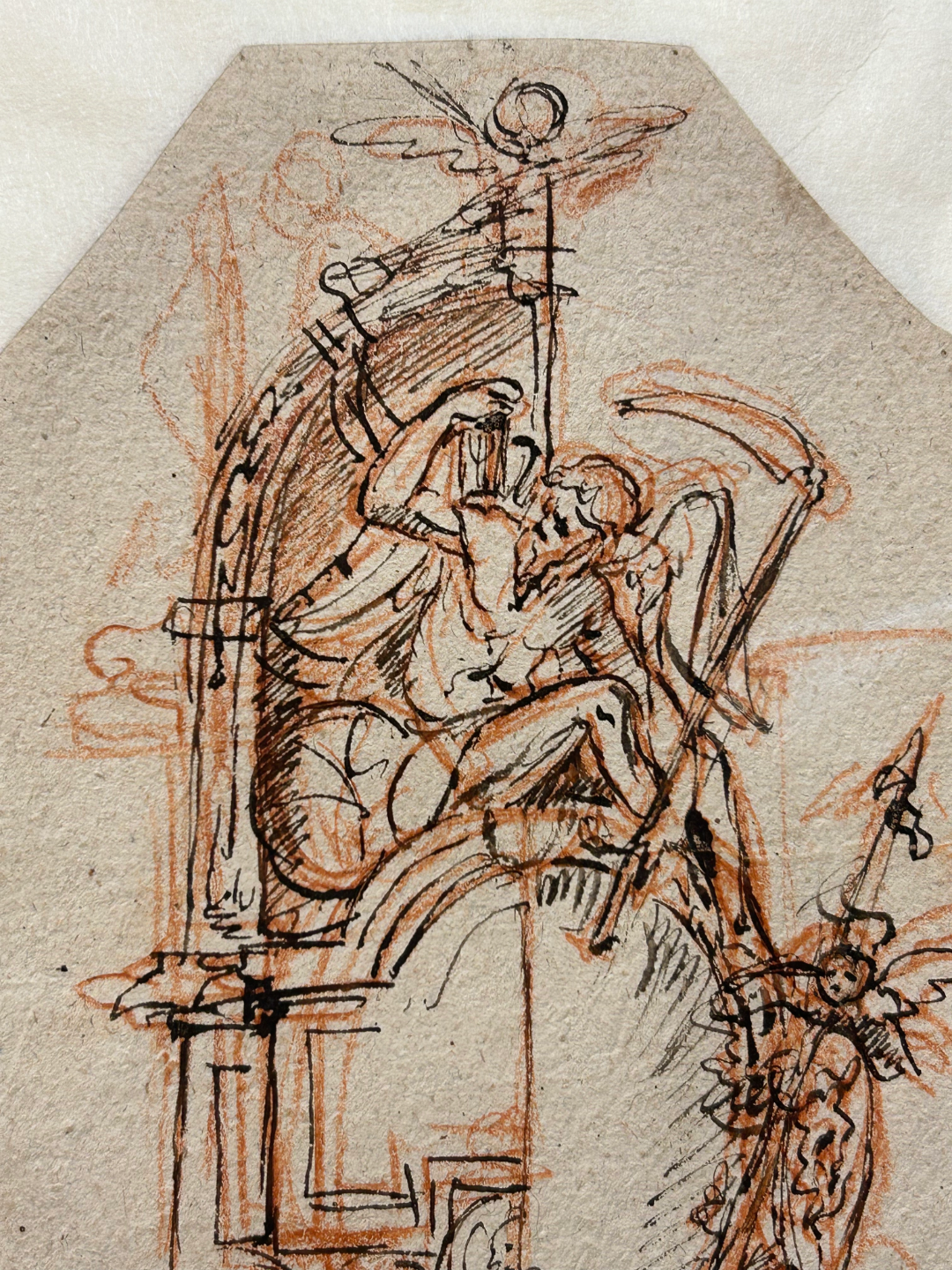
This large collection of drawings has received little art historical attention, and she hopes her research will help illuminate the design practices of Flemish sculptors for a broader audience.
Alongside this project, Hirsch will be finishing her PhD dissertation with the library and archival resources of the Rubenshuis.
“This award also reflects the support and interest that my research project has from institutions beyond Brown,” says Hirsch.
During her time at Brown, Hirsch has co-curated exhibitions at the John Hay Library at Brown University and the Museum of Fine Arts in Boston, and held a year-long proctorship position in the Prints, Drawings, and Photographs department at the RISD Museum. She has also received additional fellowships, including long-term fellowships from the Belgian American Educational Foundation Research Fellowship and the Flanders State of the Art Fellowship at the Center for Netherlandish Art at the MFA Boston.
Hirsch earned her undergraduate degree in history from Yale University and her master’s in the history of art from the Courtauld Institute of Art. She worked at the Cleveland Museum of Art in the years between each of her degrees. She is looking forward to returning to working in museums following the completion of her Fulbright and dissertation work.